In Celebration of Kartini’s Day, Honoring Indonesia’s Women Heroes
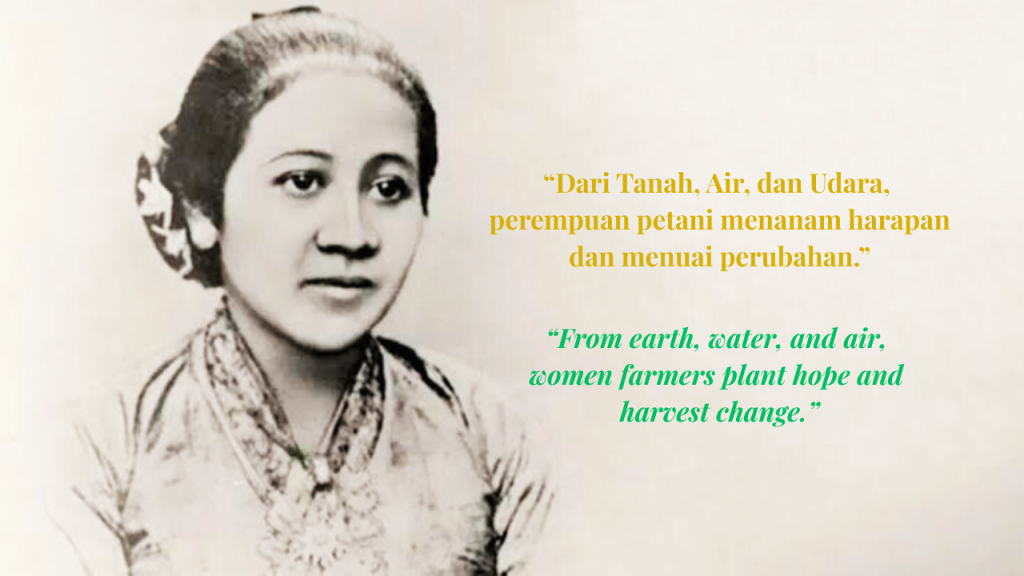
Each year on April 21st, Indonesia honors Raden Ajeng Kartini—a pioneering advocate for women’s rights whose vision continues to inspire generations. Kartini’s dream was for Indonesian women to rise with dignity, education, and empowerment. Today, her spirit lives on in countless women across the archipelago who are quietly transforming communities through their roles in the food system. From seed to plate, women are sustaining cultural heritage, nourishing families, and building pathways to food sovereignty. In celebrating Kartini’s Day, we turn our attention to these often-overlooked heroes—Indonesian women cultivating resilience, tradition, and hope in the heart of the nation’s foodscape.
Kartini’s legacy is not only about access to education or breaking barriers in formal institutions—it is also about recognizing the dignity and strength of women in everyday life. Nowhere is this more evident than in Indonesia’s food system, where women apply deep wisdom, practical skill, and intergenerational knowledge to feed both families and communities. Just as Kartini challenged the status quo in her time, today’s women food workers quietly resist inequality by preserving local food traditions, stewarding the land, and forging alternative economies through informal markets and cooperatives.
The Backbone of Agriculture and Food Traditions
In many rural regions of Indonesia, women make up a significant portion of the agricultural labor force. They are responsible for planting, weeding, harvesting, and processing crops—especially rice, vegetables, and spices that form the foundation of Indonesian cuisine. Beyond the fields, women are also central to food preservation, seed saving, and passing down traditional ecological knowledge that supports biodiversity and local food sovereignty.
Women’s participation is especially visible in traditional markets (pasar tradisional), where they dominate as small-scale traders and food vendors. These markets are not only economic hubs but also social spaces where community relationships and food culture are maintained. Despite modernization and the rise of supermarkets, traditional markets—largely powered by women—remain resilient and essential to food access, particularly for lower-income families.

In these roles, women embody the values Kartini envisioned: strength grounded in tradition, leadership shaped by care, and progress rooted in community. Their work is a living expression of Kartini’s ideals—creating social change not through protest alone, but through persistence, innovation, and love for their land and people.
Challenges: Limited Recognition and Access
Despite their central role, women in Indonesia’s food system often face systemic barriers:
- Limited land ownership: Customary and legal practices frequently restrict women’s control over land and resources, reducing their bargaining power and access to credit or training.
- Underrepresentation in decision-making: Women are often left out from agricultural cooperatives or government programs, even when they are the primary food producers.
- Gendered labor burden: In addition to working in agriculture and trade, many women are responsible for unpaid domestic labor, including cooking and caring for children and elders.
- Exposure to climate impacts: As the climate becomes more unpredictable, smallholder farmers—especially women with fewer resources—are increasingly vulnerable.
These inequalities echo the structural barriers that Kartini herself confronted over a century ago. While much progress has been made, the struggle for equal recognition and opportunity continues, especially in rural and indigenous food-producing communities.
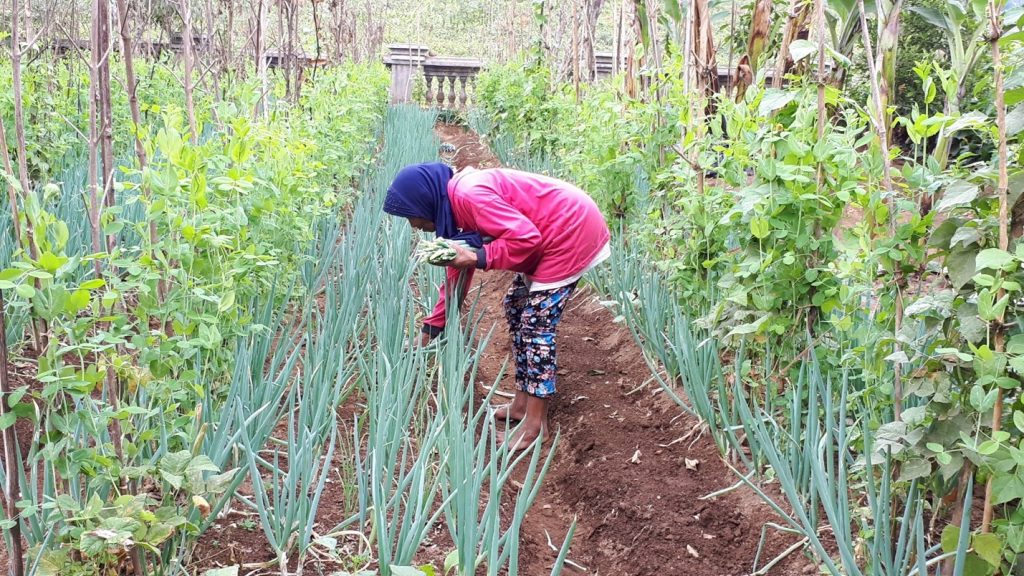
Opportunities for Transformation
Empowering women is not only a matter of equity but also of effectiveness. Studies show that when women have access to resources, training, and decision-making power, farm productivity increases, nutrition improves, and communities become more resilient. In Indonesia, several grassroots initiatives and women-led cooperatives are already leading the way:
- Urban farming and permaculture projects in Jakarta and Yogyakarta are being spearheaded by women’s groups that focus on food security and environmental education.
- Community kitchens and food forests managed by women in Eastern Indonesia help provide nutritious food while preserving indigenous knowledge.
- Digital platforms are helping women farmers and traders access wider markets, share knowledge, and build networks of support.
These movements reflect Kartini’s hope for women to gain not only freedom but capacity—to lead, to innovate, and to shape their futures. Every woman sowing seeds of change in her village or market stall stands on Kartini’s shoulders and carries her spirit forward.
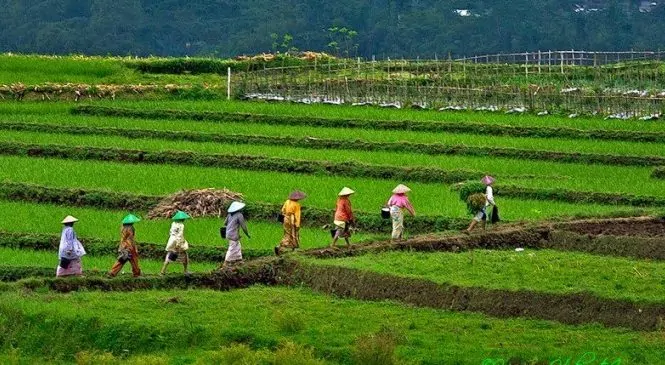
TAU’s Call to Action
If Indonesia is to build a food system that is just, sustainable, and climate-resilient, the voices and leadership of women must be centered. This means recognizing women not just as contributors but as key agents of change. Policies that support land rights, access to education, fair wages, and representation in food governance are essential. So too is cultural recognition of the deep wisdom and labor women bring to the table—every day, in every community, across the archipelago.
On this Kartini Day, let us remember that honoring our national heroines means not only reflecting on the past but also investing in the future. And that future depends on the empowerment of women—rooted in their land, resilient in their struggle, and vital to the nourishment of our nation.
Kartini once said: After darkness comes light. With women farmers, that light grows in the fields and in our hearts.
As we imagine the future of Indonesia’s food system, we must ask: how can we nourish the hands that nourish us? (a.S.)