Indonesia’s landscape is shaped by forces that are both powerful and deeply connected to everyday life. Mountains, seas, forests, farms and communities form an intricate web — one that can change quickly when nature reminds us of its presence.
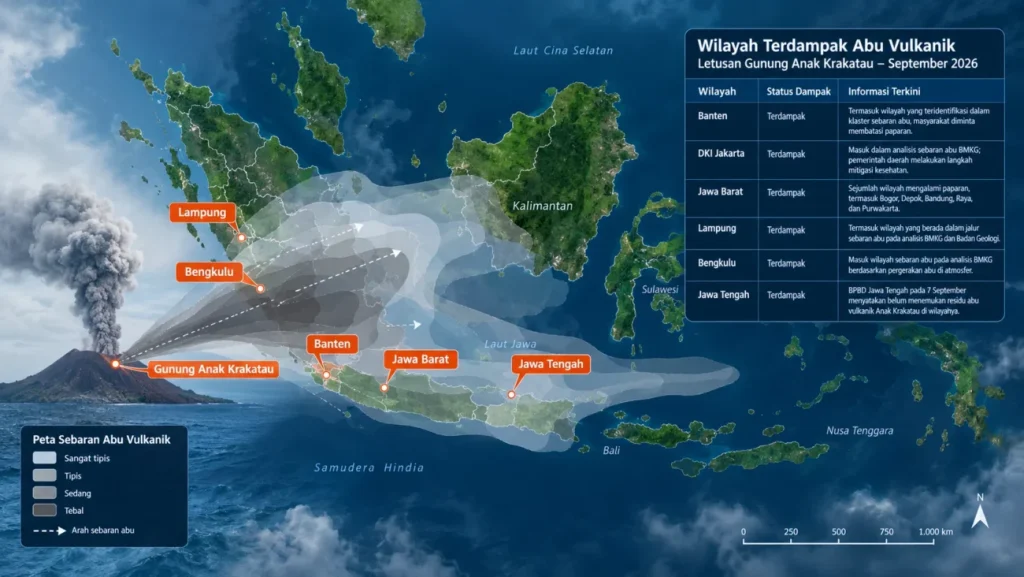
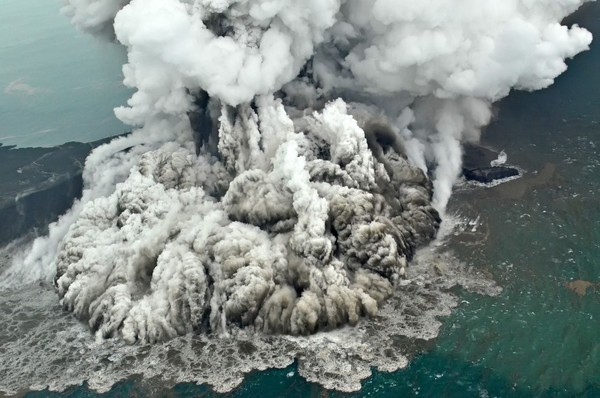
The recent activity of Mount Anak Krakatau in the Sunda Strait is one such reminder. Since July 2026, the volcano has remained at Level III (Siaga), with a series of eruptions producing lava and volcanic ash. In early September 2026, Anak Krakatau experienced a prolonged eruption lasting around 25 hours, while volcanic ash was carried by the wind towards areas around the Sunda Strait and parts of Sumatra, Banten, Jakarta and West Java. Authorities continue to monitor its activity and provide guidance to communities in potentially affected areas.
The period also drew attention because six Indonesian volcanoes experienced eruptions within a relatively similar period: Anak Krakatau, Mount Semeru in East Java, Mount Sinabung in North Sumatra, Mount Ibu in Maluku, and Ile Lewotolok and Lewotobi Laki-laki in East Nusa Tenggara (NTT). According to an expert from Universitas Gadjah Mada, the occurrence is unusual in recent decades, but does not mean that the volcanoes are part of one connected system. Each has its own characteristics and volcanic cycle; their activity occurring around the same time is better understood as an overlap of different natural cycles.
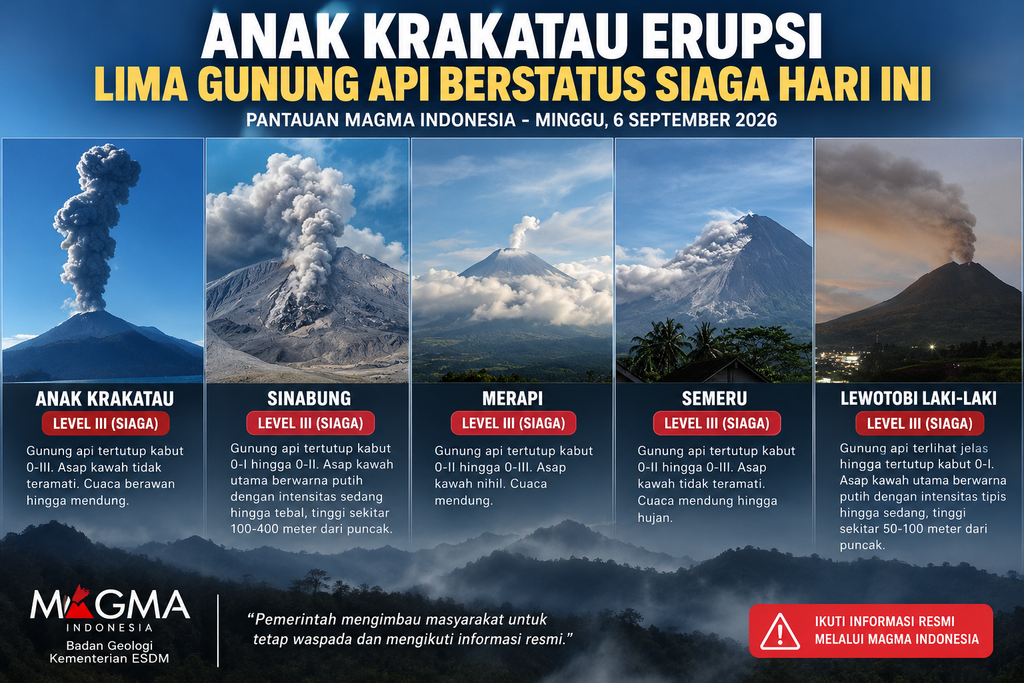
For people across Indonesia, seeing volcanic activity occurring in different parts of the country at roughly the same time naturally brings heightened awareness and concern. It is also a reminder of how closely communities live alongside Indonesia’s dynamic natural environment.
But there is another dimension worth considering: food.
For a country where agriculture, fisheries and food distribution are closely connected to the landscape, such events invite us to look beyond the immediate impact of an eruption.
What happens to food when the land, water, transport routes or livelihoods around us are temporarily affected? And how can communities, producers and markets remain connected and resilient?
These questions are at the heart of understanding food-system resilience. An eruption may be localized, but its effects can travel through the systems that connect producers, markets and consumers.
Food systems are connected to the landscape
A food system is much more than farming. It includes the farmers who grow food, fishers who harvest from the sea, traders and transporters who move products, markets and retailers, and families who ultimately put food on the table.
An event in one part of this system can therefore have effects beyond the immediate location.
Volcanic ash, for example, can reach agricultural areas depending on wind direction, weather and the characteristics of an eruption. Its effects on crops and livestock can vary considerably according to the amount of ash, crop type, growth stage, soil and water conditions.
At the same time, an eruption can temporarily influence transportation, mobility and access to markets. When one route is affected, other suppliers, routes or markets may become more important.
This is particularly relevant around the Sunda Strait. Banten, Lampung, Jakarta and West Java are not isolated food-producing or consuming areas. They are connected through roads, ports, markets and distribution networks that allow agricultural and fisheries products to move between producers and consumers.
The food system, in other words, is a network — and its resilience depends partly on the strength of those connections.
From disruption to resilience
The recent volcanic activity invites us to think about resilience not only after an event occurs, but also before it happens.
For farmers, resilience may include maintaining healthy soils, protecting water sources, diversifying crops and having access to timely information. For fishing communities, it may involve understanding changing weather and sea conditions and maintaining diverse livelihood options.
For traders, food businesses and local markets, resilience can mean maintaining alternative suppliers and transport routes. For communities, it can mean knowing where food can be sourced locally when normal distribution channels are temporarily affected.
These may appear to be separate actions. In practice, they are connected.
A farmer who has healthy soil and diversified crops is better positioned to recover from changing conditions. A community with strong local food networks may have more options when outside supplies are temporarily delayed. A market with several suppliers and transport routes may be better able to maintain the movement of food.
Learning from the landscape
Indonesia’s volcanic landscape is not only a source of risk. It has also shaped some of the country’s most fertile agricultural areas, influenced water systems and supported communities for generations.
The challenge is therefore not to separate people from nature, but to understand the relationship better.
This means strengthening the ability of communities, institutions, farmers, researchers and businesses to observe changes, share information and respond together.
It also means giving greater attention to local knowledge. Farmers and communities often understand their land in ways that are built from years of observation and experience. Combining this knowledge with scientific monitoring and timely public information can strengthen preparedness and decision-making.
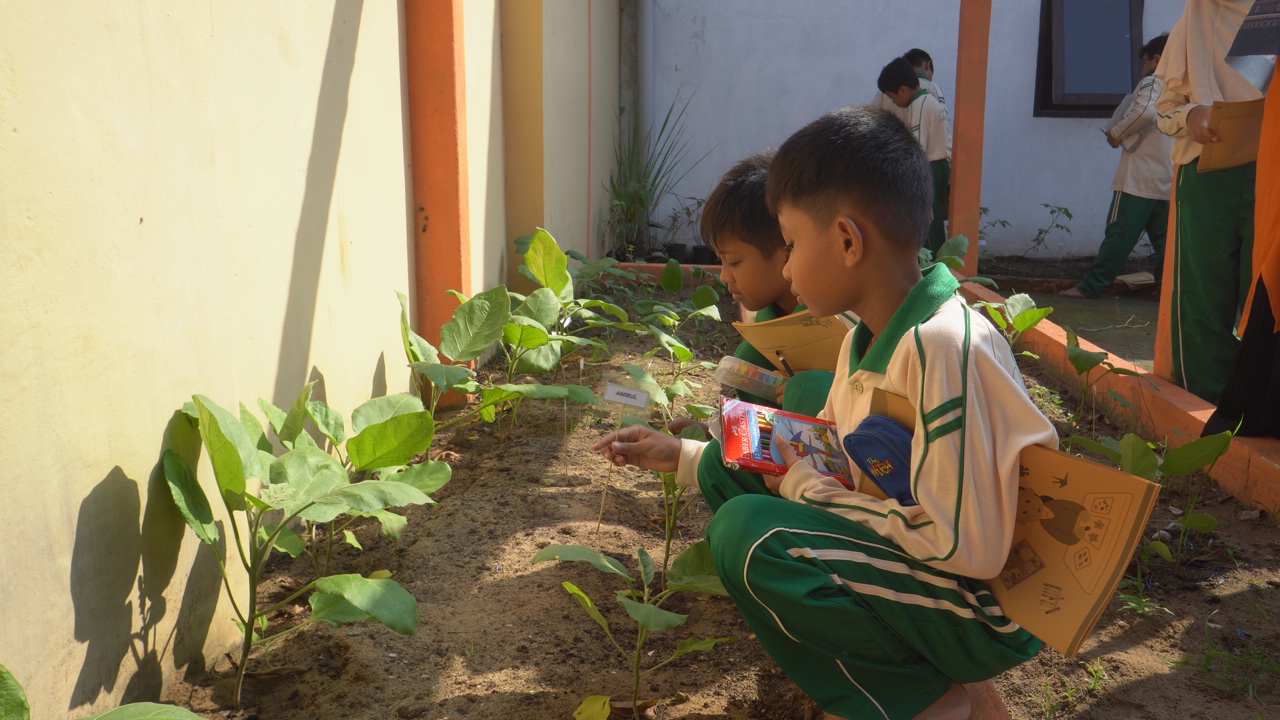
Schools and community organisations can contribute as well. Helping young people understand where their food comes from — and how agriculture, soil, water, biodiversity, climate and natural hazards are connected — is an investment in long-term resilience.
A reminder to stay connected
Indonesia cannot separate itself from its volcanic and climatic realities. Nor should natural events be viewed only through the lens of disruption.
They can also encourage us to look more closely at the systems that sustain everyday life.
The recent activity of Anak Krakatau, occurring during a period when several other Indonesian volcanoes were also active, reminds us that food security is not only about producing enough food. It is also about maintaining healthy landscapes, diverse livelihoods, reliable connections and the capacity of communities to adapt when circumstances change.
At Tanah Air Udara, we believe that strengthening food systems begins close to the ground — with people, soil, water and communities — while recognizing that these connections extend much further.
When nature changes the conditions around us, our task is not simply to respond. It is to learn, adapt and build systems that are better prepared for what comes next.
A resilient food system is, ultimately, a resilient community.