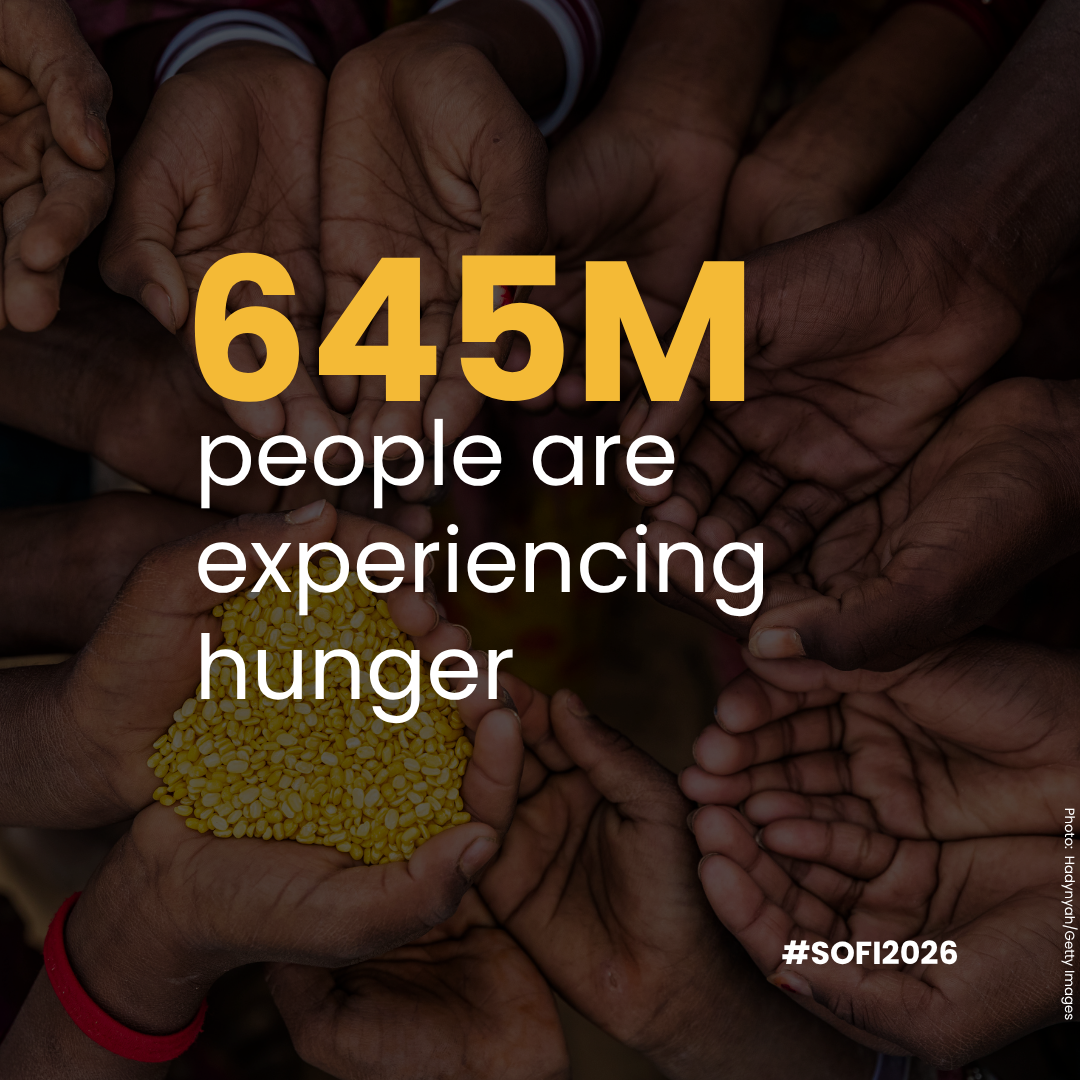
Every year on 16 October, the global community marks World Food Day, an annual reminder of our shared responsibility to end hunger, promote nutrition, and transform agrifood systems for a sustainable future.
Reflections and Opportunities for TAU on World Food Day
This year’s theme — “Hand in Hand for Better Foods and a Better Future”, underscores that no institution, sector, or community can act alone. Meaningful transformation in how food is produced, distributed, and consumed depends on collaboration — across governments, civil society, researchers, farmers, and grassroots movements alike.
For Tanah Air Udara (TAU), this year’s theme offers a timely moment for reflection. As we approach two years of our journey, we look at how our work continues to align with this global vision — and how partnerships, community-driven action, and creative funding mechanisms can deepen our impact.
In 2025, TAU entered into collaboration with The Pollination Project through the Sacred Soil initiative — a partnership that embodies the essence of “hand in hand” collaboration. Together, we are cultivating living examples of regeneration, connecting soil health, cultural stewardship, and community empowerment. This collaboration stands as a pathway for realizing the promise of better foods and a better future — one rooted in care, cooperation, and shared responsibility.
Setting the Stage: Why 2025’s Theme Matters
The FAO’s choice of theme for 2025 is especially poignant: as the agency celebrates its 80th anniversary, the world faces compounding challenges — food insecurity, climate disruption, biodiversity loss, and persistent inequitable access to nutritious diets.
By framing the effort in four “Betters”— Better Production, Better Nutrition, a Better Environment, and a Better Life — FAO invites a holistic, systems-based approach to transforming agrifood systems:
- Better Production calls for regenerative practices, agroecology, and restoring soil health.
- Better Nutrition emphasizes diversity, equity, and access to wholesome foods, locally produced foods.
- Better Environment urges protection of ecosystems, carbon sequestration, and habitat restoration.
- Better Life envisions dignity, resilience, and justice in rural landscapes and communities.
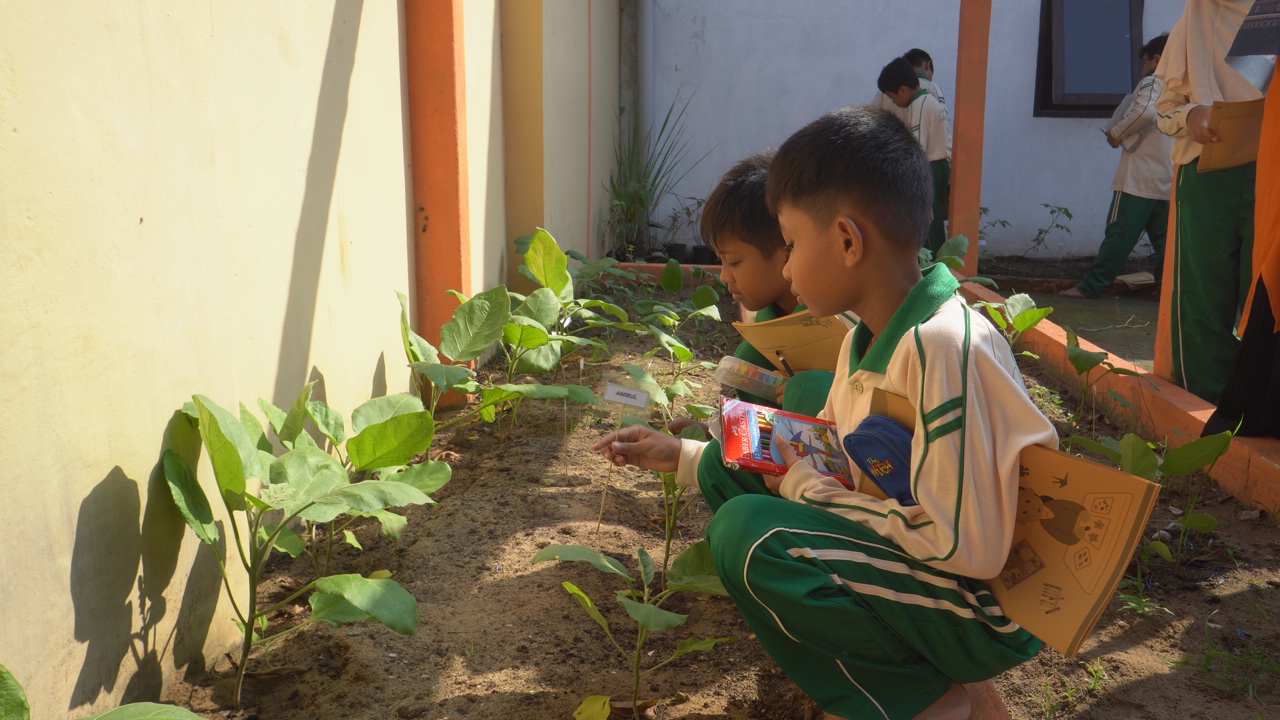
In Indonesia, these imperatives resonate profoundly. Smallholder farmers, indigenous communities, students, and young innovators are already driving change at the local level — from sustainable farming practices to food education and community-based conservation. Yet, scaling their impacts requires long term stronger partnerships, shared learning and collective commitment.
TAU’s collaboration with The Pollination Project through the Sacred Soil initiative reflects precisely this spirit of cooperation. This partnership offers both inspiration and a practical framework for how TAU can continue advancing food systems transformation — hand in hand with communities and ecosystems.
The Pollination Project & TAU’s Sacred Soil: Seeding Regenerative Pathways
The Pollination Project is a global foundation offering daily microgrants to grassroots changemakers who focus on environmental regeneration, social justice, and community-driven solutions. Their model is intentionally small-scale and trust-based — empowering local actors to experiment, adapt, and grow meaningful impact within their own contexts.
Sacred Soil, as a TAU initiative supported by TPP, seeks to reconnect cultural and often spiritual relationship with the land to ecological regeneration. In practice, this means:
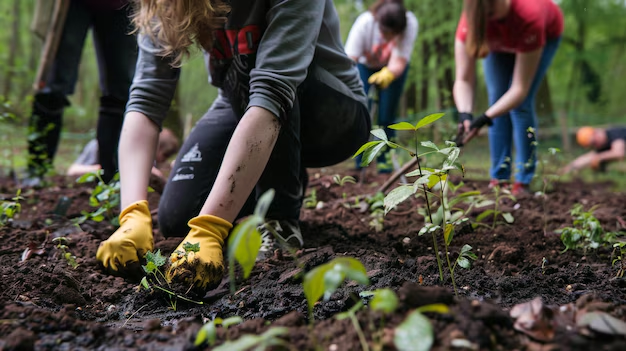
- Restoring soil health through plantings, composting, and minimal soil disturbance.
- Integrating native species, local knowledge, and lived experience into site-based action.
- Engaging communities — especially youth — in rituals, storytelling, and collective land stewardship.
- Monitoring impacts on environmental youth education, local food productivity, biodiversity protection, and community wellbeing.
By aligning Sacred Soil with Pollination Project support, TAU benefits from microgrant funding, network connections, and capacity-building frameworks. The synergy is evident: a shared belief in bottom-up, ecology-anchored transformation, with young people at its heart.
TAU’s World Food Day 2025 Messaging: From Principle to Practice
To mark this World Food Day, TAU’s narrative centers on three interlinked pillars:
Collaboration as Foundation, Not Afterthought
TAU’s work cannot be siloed. Through Pollination Project support, we co-design regenerative food systems with youth and communities — not imposing blueprints. This approach embodies the essence of “Hand in Hand.” We invite educators, NGOs, and local knowledge-holders to join in this shared journey.
Regeneration Over Extraction
Sacred Soil shifts focus from extractive agriculture toward long-term soil care, agroecological diversity, and ecological integrity — investments in the well-being of future generations. By nurturing living soils and learning ecosystems, we contribute to Food Production and a Greener Environment in harmony.
Food, Culture & Resilience
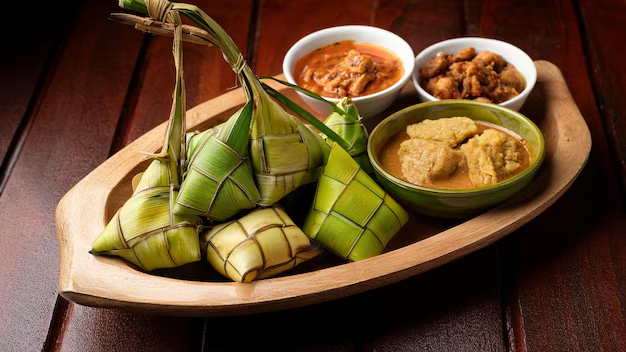
Sacred Soil is not only about what we grow, but about how we remember, share, and sustain food stories. We celebrate food as a cultural expression — linking indigenous knowledge, local nutrition, and community dignity. This is how we cultivate Better Nutrition and Better Life together.
Measuring Impact & Looking Ahead
World Food Day 2025 reminds us: transformation is not an option but an imperative. The theme “Hand in Hand for Better Foods and a Better Future” is a call to partnership — a recognition that our table’s abundance depends on invisible yet vital networks: soil microbes, pollinators, local stewards, and collaborative systems.
TAU’s engagement with The Pollination Project through the Sacred Soil initiative is a living example of this principle. Through co-design, ecological restoration, cultural reinvigoration, and shared agency, we aim not merely to feed—but to regenerate.
Let this World Food Day be more than a moment: let it be a marker of renewed alliances, deeper commitment, and a future where communities and ecosystems thrive together.
TAU invites you to collaborate — hand in hand — for better foods and a better future!
Readings:
FAOHome-WorldFoodDay
World-food-forum
The Pollination Project